
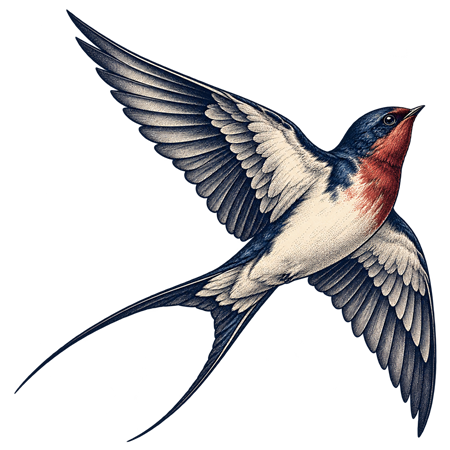
Give each sketchbook session one question to investigate. You might study how a folded leaf changes direction, how two shapes overlap or how much detail a silhouette needs. A specific question makes it easier to begin and easier to decide what to do next.
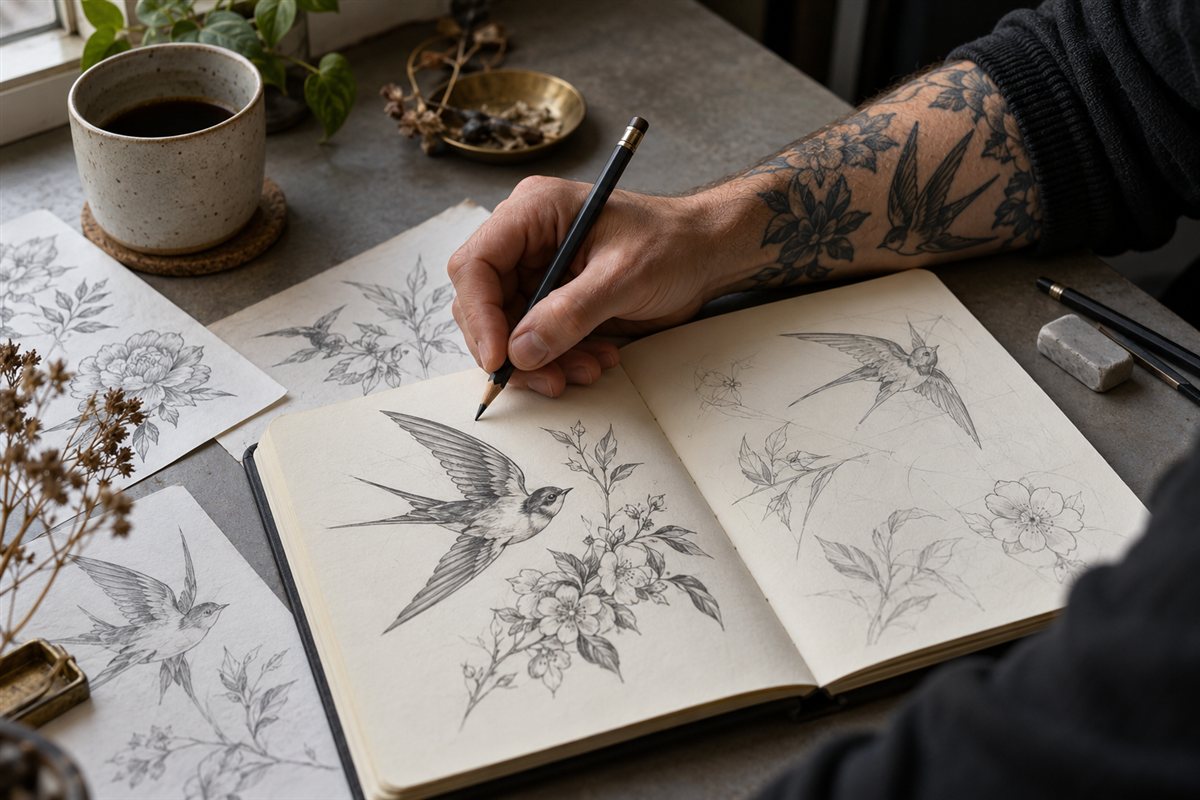
The routine below is an original editorial exercise for drawing on paper. It is not a training syllabus or a test of readiness to tattoo. Adapt the length and difficulty to the time and attention you have available.
Set a question small enough for one sitting
Choose a subject you can comfortably observe, such as a leaf, a folded piece of paper or an ordinary object on your desk. Keep the first task narrow. Instead of “get better at flowers”, try “show where these petals overlap without drawing every edge equally strongly”.
Write that question at the top of the page. It will help you recognise useful work even when the result is unfinished. You are looking for an answer you can investigate, not a reason to fill every corner.
Decide when you will stop before you begin. A short session with a visible next step is easier to resume than a page that only counts as successful when it looks finished.
Use three passes through the subject
Divide the session into observation, variation and reflection. The suggested timings are simply one workable starting point; they are not minimum practice requirements.
| Pass | A possible short session | What to leave on the page |
|---|---|---|
| Observe | About ten minutes | One study and a note about a relationship you noticed |
| Vary | About ten minutes | Two small original compositions exploring that relationship |
| Reflect | About five minutes | One useful finding and one next question |
If you have less time, do one observation study and a reflection. If you have more, make another purposeful attempt rather than extending the session only to polish the first drawing.
Observe before decorating
Begin with the large relationships. Notice the subject's width compared with its height, the direction of its main axis and the spaces around it. Choose a few points to compare rather than outlining every visible feature immediately.
For a folded leaf, you might notice that the tip leans beyond the stem and that one side presents a broader shape. Draw that relationship first. Then add only enough interior information to explain the fold.
Look back at the subject while drawing. When the image differs, describe the difference specifically: “the upper section is too wide” gives you something to revisit. “This is bad” does not identify a drawing decision.
Turn an observation into an original study
On a different part of the page, use the relationship you noticed as the starting point for your own composition. You might exaggerate the curve, combine two shapes or move the open space from the centre to one side.
Label the observed study and the invented variations so you can distinguish them later. The point is to show what you changed deliberately, not to pretend the imagined version was an exact record of the subject.
Keep copied practice studies separate from drawings you present as original designs. This exercise works without tracing another artist's flash: the subject, your observations and your choices provide the material.
Compare attempts without erasing the evidence
Leave the first attempt visible when you make the next one. Put a short note beside the change: “less interior detail”, “wider gap” or “curve turns earlier”. These notes let you compare decisions instead of relying on a vague memory of improvement.
You do not have to keep every abandoned mark in a finished presentation. The working sketchbook has a different job from the portfolio you show a studio. It can contain experiments, unresolved questions and versions that explain why you chose something else.
If you want to explore several related compositions, continue with the flash-series exercise. Keep the goal on paper rather than making claims about suitability for skin.
Finish with a useful next page
At the end, answer three short questions: what did I notice, what did I change, and what should I investigate next? Keep the answers concrete enough that you could resume after a few days away.
For example: “The fold reads more clearly when the outer shape carries it. Next time, try the same subject from the opposite side before adding interior lines.” That is a starting instruction, not a verdict on your ability.
After several sessions, review the pages for recurring questions. Choose one to revisit deliberately. Use the photography guide if you want a consistent record of the pages, preserving the original drawings and their dates so you can see how your decisions developed.