
Rotary and coil describe how a tattoo machine produces movement. They do not tell you everything about its power supply, compatible consumables, handling or suitability for your training. Compare named models and the complete equipment needed to use them, with guidance from the person supervising your work.
This is a purchasing guide. It does not provide operating settings, tuning instructions or a method for tattooing skin.
Understand the mechanical difference
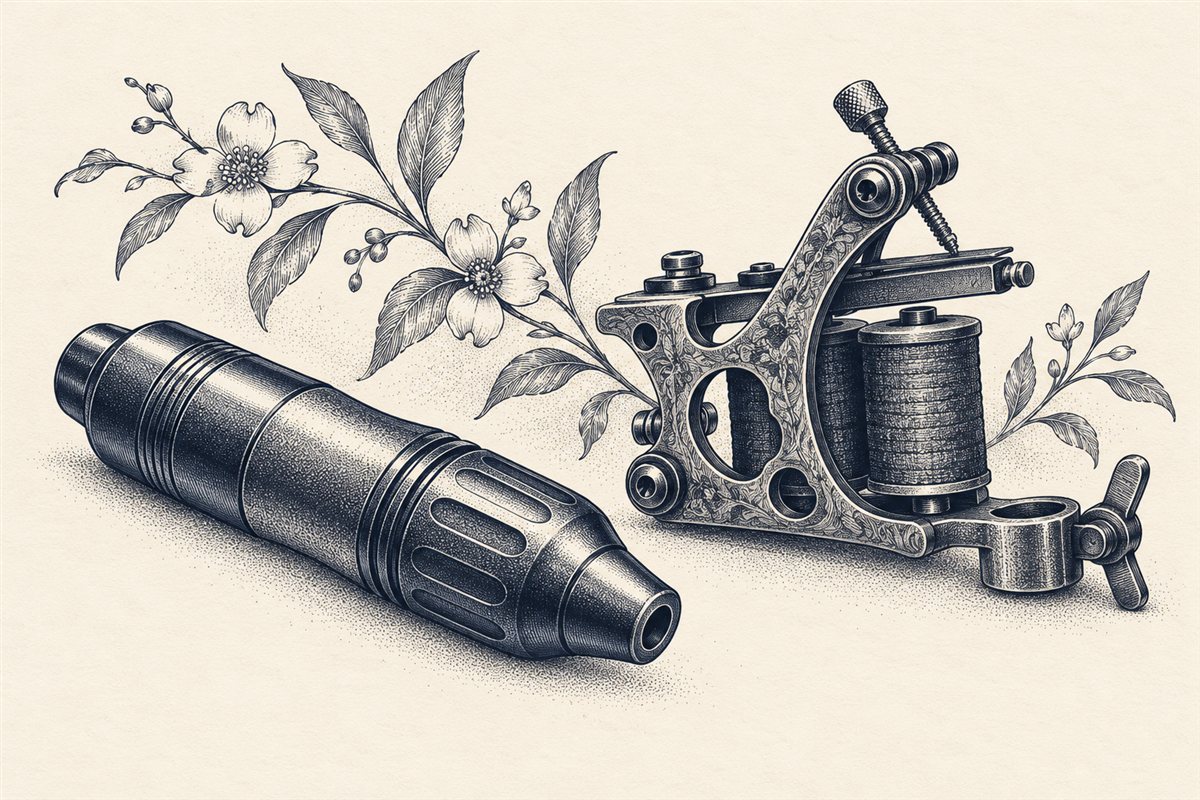
A coil machine uses electromagnetic coils acting on an armature bar. A rotary machine uses a motor and a mechanism that converts its movement into the required needle movement. FK Irons describes this distinction in its manufacturer guide, although its wider claims about superiority are sales claims rather than independent comparative evidence.
That basic distinction is useful, but avoid turning it into a rule that every rotary behaves alike or every coil suits the same work. The exact design, components and supported configuration matter. A quieter sound or a different appearance does not establish that a machine is safer or that its owner is ready to use it professionally.
Keep power and shape separate from mechanism
The word "rotary" does not automatically mean wireless. FK Irons' comparison chart, for example, lists an RCA power connection for the Xion and different battery arrangements for other models. Check the exact model rather than assuming that machines from one manufacturer share a power system.
Likewise, a pen-shaped body describes its form. It is not enough information to select a battery, grip or cartridge. Ask for the current manual and the complete model name before buying accessories.
| Question | Detail to confirm |
|---|---|
| How is it powered? | Required supply, connection, battery and charger |
| What is included? | Machine, grip, cables and any batteries listed in the actual bundle |
| Which consumables fit? | The maker's supported needle or cartridge arrangement and any restrictions |
| What can be changed? | Whether the particular model has fixed, adjustable or interchangeable features |
| Who supports it? | An identified seller, service route and applicable warranty terms |
Save the supplier's answers with the quote. A photograph showing an accessory is not confirmation that it comes in the box.
Compare handling as a complete assembly
Weight figures are only useful when you know what they include. Ask whether the published figure covers the grip and battery, and compare the configuration you would actually hold. A light bare machine and a heavier complete assembly are not equivalent measurements.
Where practical, discuss a demonstration with an established supplier and your mentor. Consider grip dimensions, balance, cable position and access to controls. Keep this assessment separate from client treatment; a purchasing demonstration should not become an unsupervised trial on skin.
Do not promise yourself that one category will prevent fatigue or solve discomfort. Manufacturer descriptions of handling are a starting point for questions, not a guarantee of an individual result.
Check maintenance and service before ordering
Read the care instructions for the specific machine. Coil and rotary designs can have different service needs, but "rotary" does not mean maintenance-free. Do not assume that a cleaning method, replacement part or adjustment shown for another model applies to yours.
Ask which tasks the manufacturer permits the owner to perform, which need service support and whether a repair involves sending the machine away. Check the supplier's location, process and likely practical implications for your studio. Keep proof of purchase and the model or serial details accessible.
For a UK purchase, establish who will handle the warranty claim. An overseas listing with a lower headline price may involve a different returns and service arrangement. Obtain the terms rather than assuming an identical local service.
Price the whole setup
Compare written baskets, not just machine prices. Include the supported power arrangement, required grip, initial consumables, delivery and any other necessary accessories. Record recurring supplies separately from equipment you expect to keep.
Leave unconfirmed costs visible. Do not count a battery you already own as reusable until compatibility is confirmed, or treat an advertised maximum runtime as a promise for every workload. Build a practical plan for charging, servicing and equipment downtime with your supervisor or studio team.
Add the agreed basket to your equipment list and studio budget. Revisit it if the model or bundle changes.
Make the choice fit your training
If you are seeking an apprenticeship, discuss equipment with the studio before buying a machine to impress it. Its teaching approach and supported equipment may make a premature purchase unnecessary. Your portfolio can demonstrate drawing ability without a machine purchase.
For an established artist comparing replacements, write down the specific problem the new setup must address. Choose against that requirement, verified compatibility and accessible support. A category label or an enthusiastic review cannot answer those questions on its own.
Sources & further reading
Sources checked .